
PythonMore on Functions
Special Variable Name
What Is __name__?
__name__ is a special built-in variable in Python that stores the name of the current module.
Its value changes depending on how the Python file is executed.
- If a file is run directly,
__name__is set to"__main__" - If a file is imported as a module,
__name__is set to the module’s filename (without.py)
This behavior allows Python programs to distinguish between direct execution and import usage.
Why Is __name__ Important?
When a Python file is imported:
- All top-level statements execute immediately.
- This can cause unexpected output or side effects.
To avoid this, Python provides the __name__ check to control what code runs in different contexts.
__name__ and globals()
print(globals())
print(__name__)globals()displays all global variables in the current module__name__appears as part of the global namespace- Helps in debugging and understanding runtime context
The if __name__ == "__main__": Guard
This construct ensures that certain code runs only when the file is executed directly, not when imported.
if __name__ == "__main__":
    # code runs only when file is executed directly
Key Benefits:
- Prevents unwanted execution during imports
- Keeps modules clean and reusable
- Separates test/debug code from reusable logic
Example
calc.py
print("In calc", __name__)demo.py
import calc
print("In demo", __name__)
Output:
$ python calc.py
In calc __main__

$ python demo.py
In calc calc
In demo __main__
Explanation:
calc.pyrun directly →__name__ == "__main__"calc.pyimported →__name__ == "calc"demo.pyis the entry point →__name__ == "__main__"
Practical Use Case: Protecting Test Code
calc.py
def add():
    return "addition"

def sub():
    return "subtraction"

if __name__ == "__main__":
    print(add())
    print(sub())
demo.py
from calc import *

result = add()
print("In demo", result)
Output:
$ python calc.py
addition
subtraction

$ python demo.py
In demo addition
Explanation:
- Test code runs only when
calc.pyis executed directly - Importing
calcdoes not trigger test output
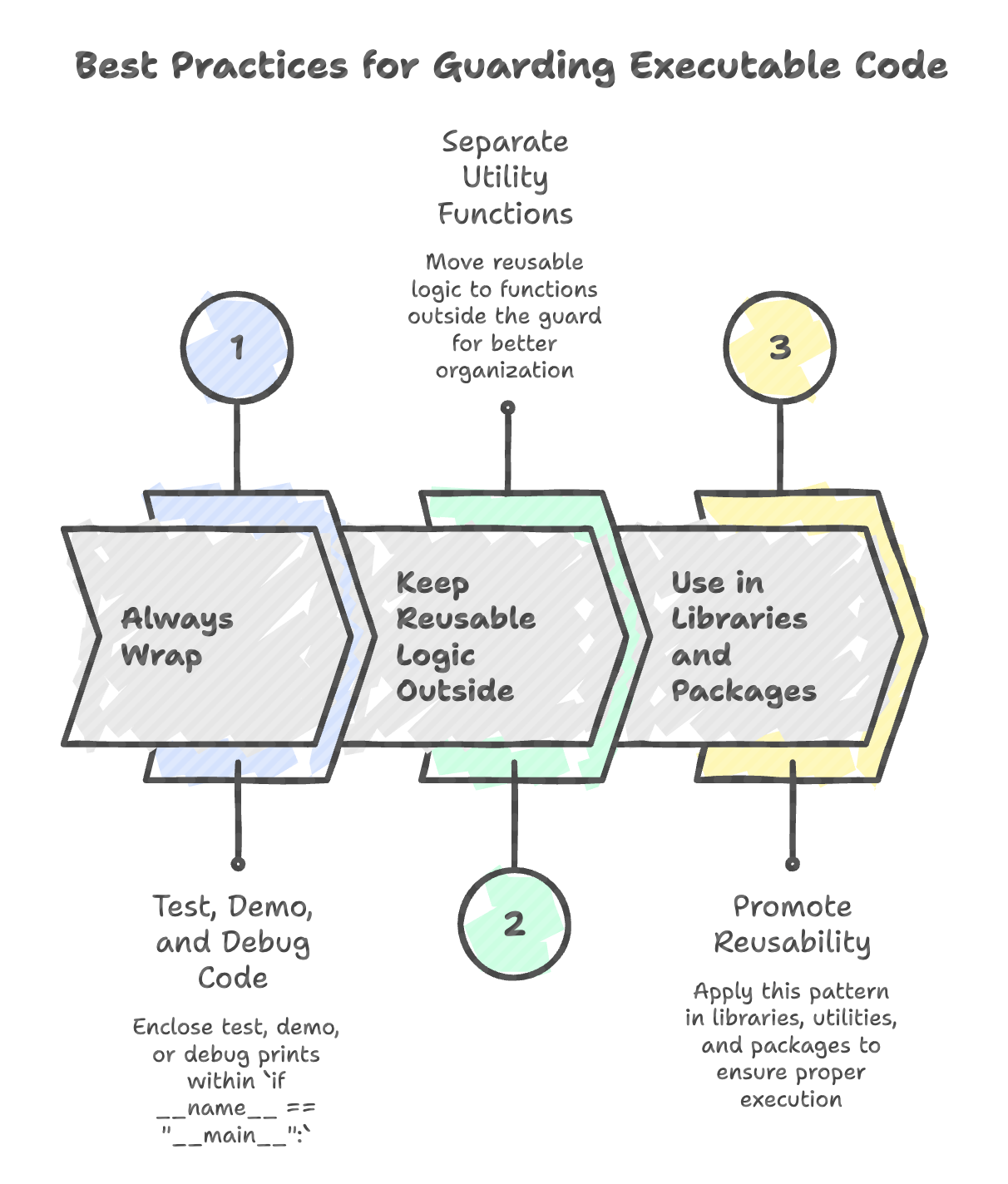
Summary
__name__identifies the execution context of a Python module at runtime.- A value of
"__main__"indicates that the script is being executed directly as the program’s entry point. - Helps prevent unintended code execution when modules are imported into other programs.
- Promotes clean separation between reusable logic and test or execution-specific code.
- Enables writing modular, reusable, and maintainable Python applications following best practices.
Written By: Muskan Garg
How is this guide?
Last updated on