
Abstract Class and Abstract Method
What is Abstraction?
Abstraction is an Object-Oriented Programming (OOP) principle that focuses on showing only the essential features of an object while hiding the internal implementation details.
In abstraction, the user interacts with what an object does, not how it does it.
Real-World Analogy
Consider driving a car:
- You know what actions to perform (steer, accelerate, brake)
- You don’t need to know how the engine, gearbox, or fuel system works internally
➡️ This separation of what to do from how it is done is called abstraction.
Abstraction separates the interface (what is exposed) from the implementation (how it works internally).
This allows users to work with a system without understanding its internal complexity, making software easier to use, extend, and maintain.
Abstraction in Python
Python implements abstraction using:
- Abstract Base Classes (ABC)
- Abstract Methods
These are provided by the built-in abc module.
Key Characteristics
- An abstract class cannot be instantiated
- An abstract method has no implementation
- Any subclass must implement all abstract methods
- Ensures a standard structure (interface) across subclasses
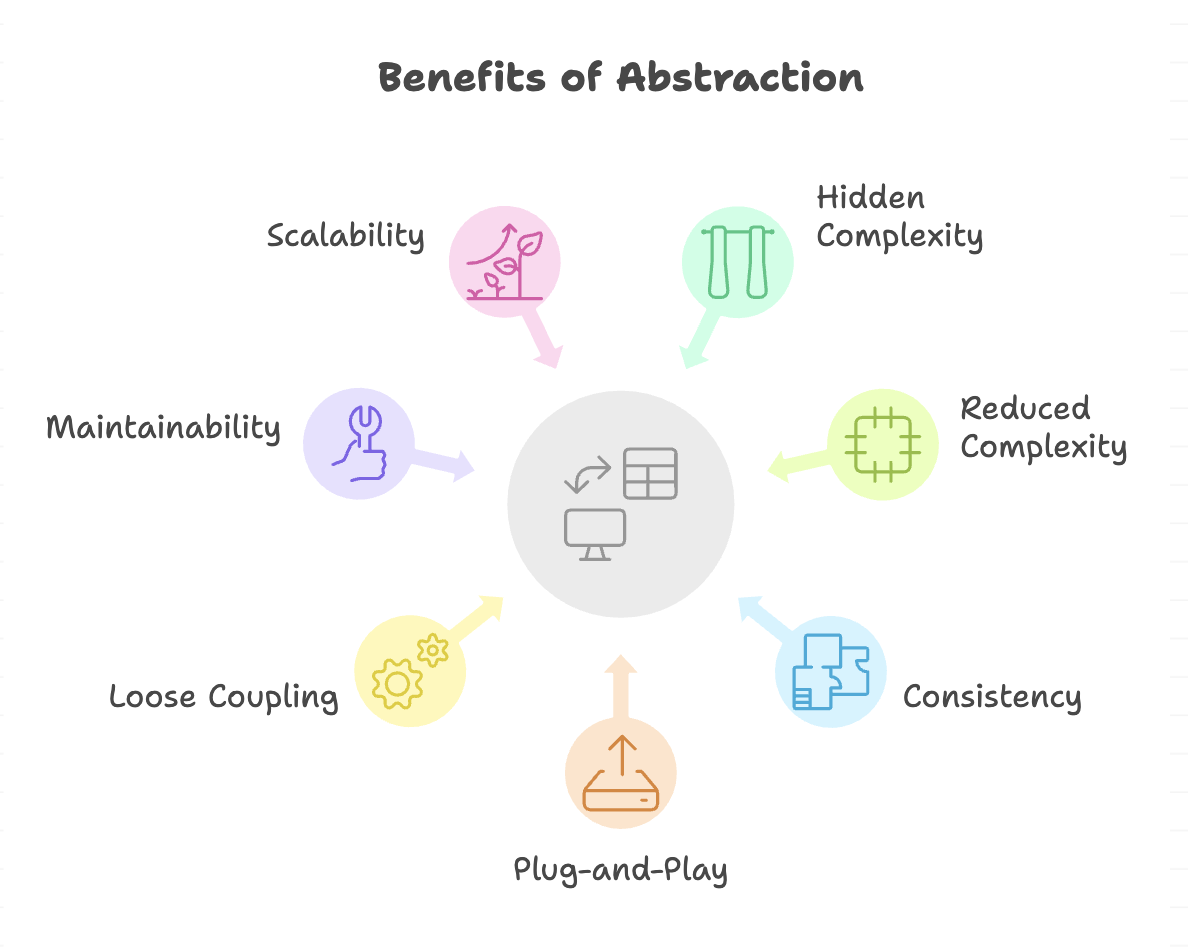
Abstract Class and Abstract Method
1. Abstract Class
- A class that serves as a blueprint
- May contain abstract methods
- Cannot be instantiated directly
Rules to Create an Abstract Class
- Import
ABCandabstractmethod - Inherit from
ABC - Decorate abstract methods using
@abstractmethod - Do not create objects of the abstract class
Example: Abstract Class
from abc import ABC, abstractmethod

class A(ABC):

    @abstractmethod
    def show(self):
        pass
obj = A()Output
TypeError: Can't instantiate abstract class A without an implementation for abstract method 'show'- Python prevents object creation
- Ensures abstraction is enforced
2. Abstract Method
- A method declared but not implemented
- Forces subclasses to provide their own implementation
@abstractmethod
def pay(self):
    pass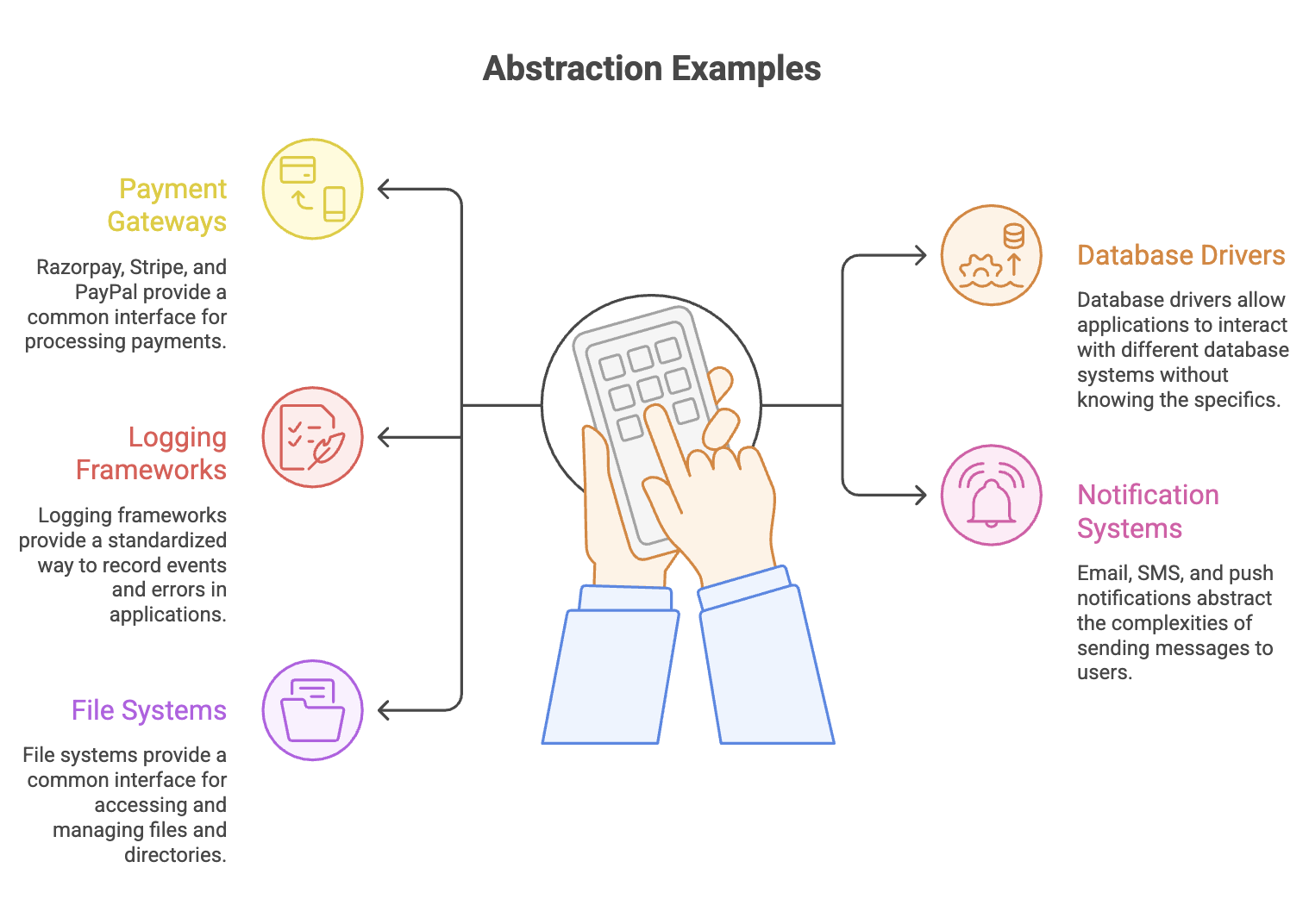
Example: Tight Coupling (Without Abstraction)
class RazorPay:
    def pay(self):
        print("paying using RazorPay...")

class Purchase:
    def __init__(self, gateway):
        self.gateway = gateway

    def checkout(self):
        print("checking out...")
        self.gateway.pay()
gateway = RazorPay()
purchase = Purchase(gateway)
purchase.checkout()Output
checking out...
paying using RazorPay...
Issue ❌
Purchaseis tightly coupled toRazorPay- Switching to another gateway requires code changes
- No guarantee that another gateway has
pay()method
Example: Abstraction Using Abstract Class
Step 1: Define a Standard Interface
from abc import ABC, abstractmethod

class PaymentGateway(ABC):

    @abstractmethod
    def pay(self):
        pass
✔️ Defines a contract
✔️ Ensures consistency
Step 2: Implement the Interface
class TeluskoPay(PaymentGateway):
    def pay(self):
        print("paying using TeluskoPay...")
class RazorPay(PaymentGateway):
def pay(self):
print("paying using RazorPay...")✔️ Both classes follow the same standard
✔️ Both must implement pay()
Step 3: Use Abstraction in Business Logic
class Purchase:
    def __init__(self, gateway):
        self.gateway = gateway

    def checkout(self):
        print("checking out...")
        self.gateway.pay()
Step 4: Plug-and-Play Usage
gateway1 = RazorPay()
gateway2 = TeluskoPay()

purchase = Purchase(gateway2)
purchase.checkout()
Output
checking out...
paying using TeluskoPay...
✔️ No change in Purchase class
✔️ Easy gateway switching
✔️ Loose coupling achieved
What Happens If Abstract Method Is Not Implemented?
class RazorPay(PaymentGateway):
    pass
gateway = RazorPay()Output
TypeError: Can't instantiate abstract class RazorPay with abstract method pay- Python enforces abstraction
- Prevents incomplete implementations
Summary
- Abstraction focuses on what an object should do, not how it performs the task internally.
- In Python, abstraction is implemented using abstract base classes (ABC) and abstract methods.
- Abstract classes define a standard interface or blueprint, not concrete implementations.
- Any subclass inheriting from an abstract class must implement all abstract methods before it can be instantiated.
- Abstraction promotes loose coupling, making systems scalable, flexible, and easier to maintain.
Written By: Muskan Garg
How is this guide?
Last updated on