
Class and Object
Introduction to Object-Oriented Programming (OOP)
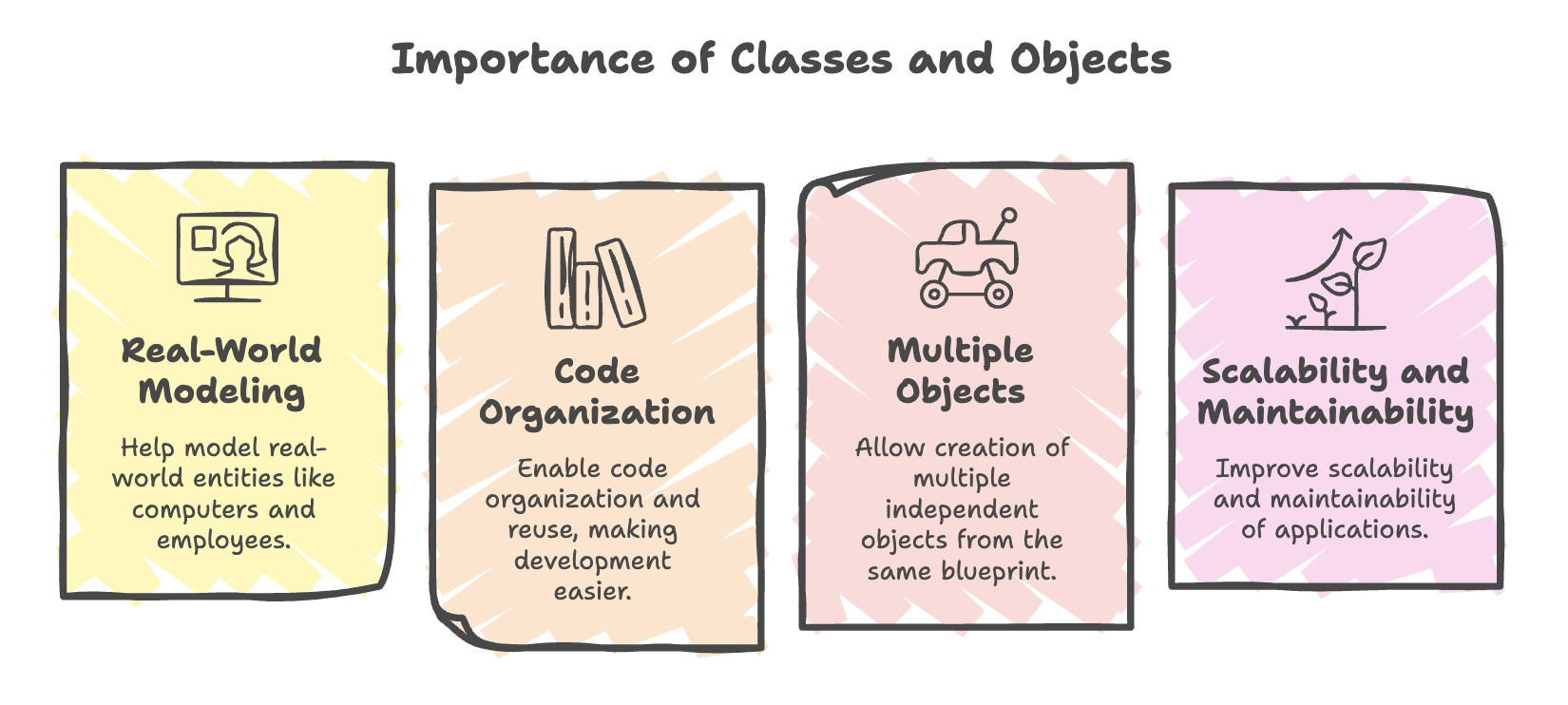
Object-Oriented Programming (OOP) is a programming paradigm that models real-world problems using objects. Python supports both functional and object-oriented programming, but OOP is especially effective for building large, real-life, and scalable applications.
In OOP:
- Real-world entities are represented as objects
- Objects contain both data and behavior
- Programs become more structured, reusable, and easier to maintain
What Is a Class?
A class is a blueprint or template used to create objects.
It defines:
- Properties (attributes): Data or characteristics
- Behaviors (methods): Actions the object can perform
Example: A
Computerclass defines what a computer has (RAM, processor) and what it does (display configuration).
A single class can be used to create multiple objects, all sharing the same structure.
What Is an Object?
An object is a runtime instance of a class.
- Objects are created using the class name followed by parentheses
- Each object has its own identity and memory
- Objects can access class-defined methods and data
comp1 = Computer()
comp2 = Computer()
Here, comp1 and comp2 are two different objects created from the same class.
Creating a Class in Python
In Python, classes are defined using the class keyword.
class Computer:
passpassindicates an empty class- Defining a class does not create an object
Instantiating an Object
To create an object:
- Use round brackets after the class name
- This process is called instantiation
comp1 = Computer()❌ This does NOT create an object:
comp1 = ComputerIt only assigns the class reference.
Objects and Types in Python
Python is fundamentally object-oriented.
Examples:
a = 10
print(type(a))        # <class 'int'>
print(type(comp1)) # <class '__main__.Computer'>- Integers belong to the
intclass - Custom objects belong to their defined class
Defining Methods in a Class
Methods are defined using def inside a class.
class Computer:
    def config(self):
        print("i7, 16GB, 1TB")
Calling Methods
Methods can be called in two ways:
Using the object (recommended):
com1 = Computer()
com1.config()
Using the class (explicitly passing the object):
Computer.config(com1)In both cases:
The object is passed as self automatically when using object.method().
The Role of self
selfrefers to the current object instance- It allows methods to:
- Access object data
- Modify object attributes
- Enables multiple objects to share the same method logic while operating on different data
class Computer:
    def config(self):
        print("i7, 16GB, 1TB")

com1 = Computer()
com2 = Computer()

com1.config()
com2.config()
Both objects use the same method but remain independent.
Multiple Objects from One Class
- A single class can create multiple objects
- Each object:
- Has its own memory location
- Maintains independent state
- Methods are shared, data is separate
This is similar to:
- Multiple remotes controlling different devices
- Multiple humans sharing behaviors but having different identities
Summary
- A class is a blueprint while an object is its instance.
- Objects are created using constructor syntax
ClassName(). selfrepresents the current object.- Methods operate on object-specific data.
- Multiple objects share the same class but hold independent state.
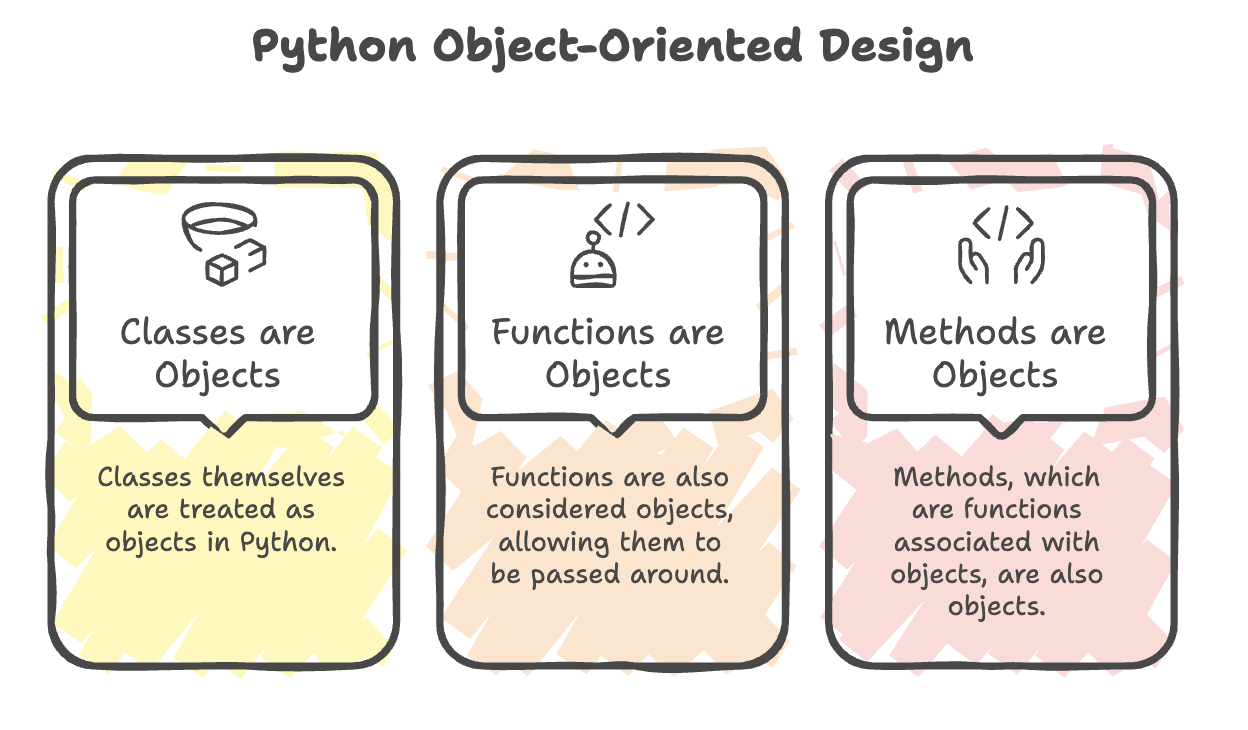
- Python treats everything as an object at its core.
Written By: Muskan Garg
How is this guide?
Last updated on