
Dynamic Method Dispatch
1. Introduction
Dynamic Method Dispatch, also known as Runtime Polymorphism, is one of the most powerful features of Java’s object-oriented programming model.
It allows Java to decide which overridden method to call at runtime, not at compile time.
This mechanism enables:
- Polymorphism
- Flexible and extensible code
- Clean hierarchical designs
- Overriding behavior selection based on object type
Understanding dynamic dispatch is critical for mastering inheritance and polymorphism.
2. What Is Dynamic Method Dispatch?
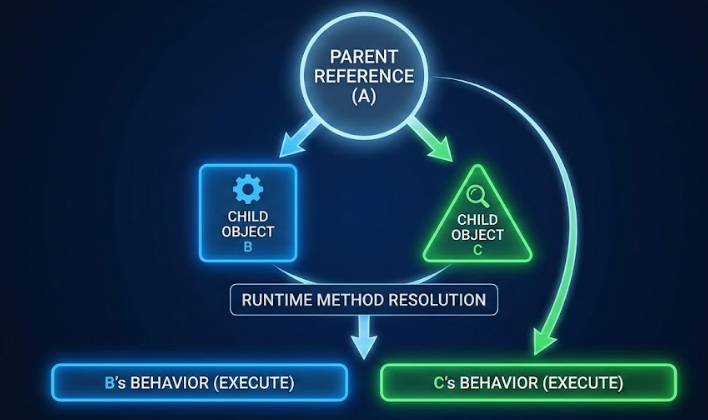
Dynamic Method Dispatch is the process where a superclass reference variable refers to a subclass object, and the method that gets executed is determined by the actual object the reference variable points to.
Key Idea:
The reference type determines what you can access,
but the object type determines which overridden method runs.
3. Basic Example
class A {
    void show() {
        System.out.println("A show");
    }
}

class B extends A {
    @Override
    void show() {
        System.out.println("B show");
    }
}

public class Main {
    public static void main(String[] args) {
        A obj = new B(); // upcasting
        obj.show();      // B show (decided at runtime)
    }
}
Although obj is of type A, the actual object is B.
So, B’s show() method is executed.
4. Why Does Java Use Dynamic Dispatch?
Because Java supports method overriding. Overridden methods allow subclasses to modify parent behavior.
If the method were resolved at compile time, overriding would not work.
Dynamic dispatch ensures:
- Flexible behavior
- Extensibility
- Clean abstraction between parent and child classes
5. Multiple Subclasses Example
class Animal {
    void sound() {
        System.out.println("Animal makes sound");
    }
}

class Dog extends Animal {
    void sound() {
        System.out.println("Dog barks");
    }
}

class Cat extends Animal {
    void sound() {
        System.out.println("Cat meows");
    }
}

public class Main {
    public static void main(String[] args) {
        Animal a;

        a = new Dog();
        a.sound(); // Dog barks

        a = new Cat();
        a.sound(); // Cat meows
    }
}
This allows writing code that works with many different subclasses seamlessly.
6. Rules of Dynamic Method Dispatch
6.1 Only works with method overriding
Not applicable to:
- Method overloading
- Static methods
- Constructors
- Private methods
- Final methods
6.2 Reference type decides what methods are visible
Example:
Animal a = new Dog();
a.sound();    // allowed (in parent)
a.bark();     // ERROR (not in parent)
6.3 Object type decides which overridden method executes
7. Real-World Use Case
Example: Payment Processing
class Payment {
    void process() {
        System.out.println("Generic payment");
    }
}

class CreditCard extends Payment {
    void process() {
        System.out.println("Credit card payment");
    }
}

class UPI extends Payment {
    void process() {
        System.out.println("UPI payment");
    }
}
Runtime selection:
Payment p = new UPI();
p.process(); // UPI payment
You can add new payment types without changing existing code.
8. Method Dispatch Flow Diagram
- Compiler checks reference type methods → ensures method exists
- JVM checks object type at runtime
- JVM invokes the overridden version in the actual object
9. What Is Not Decided at Runtime
- Overloaded methods (resolved at compile time)
- Static methods (resolved based on reference type)
- Variables (never polymorphic)
Example:
class A {
    static void display() { System.out.println("A display"); }
}

class B extends A {
    static void display() { System.out.println("B display"); }
}

A obj = new B();
obj.display();  // A display (static binding)
Static methods do NOT participate in dynamic dispatch.
10. Summary
- Dynamic Method Dispatch enables runtime polymorphism.
- Superclass reference → subclass object.
- Runtime decides which overridden method runs.
- Essential for flexible, extensible application designs.
- Static methods, overloaded methods, and variables do NOT support dynamic dispatch.
This completes Dynamic Method Dispatch in Java.
Written By: Shiva Srivastava
How is this guide?
Last updated on