
Arguments in Function
In Python, functions can accept different kinds of arguments, making them flexible, reusable, and easy to adapt to varying input requirements. Python supports required arguments, default arguments, variable-length arguments, and keyword arguments, each serving a specific purpose in function design.
Functions with Required Arguments
- Required arguments are parameters that must be provided when a function is called. Python matches these arguments by position (unless keyword arguments are used)
- If any required argument is missing, Python cannot execute the function and raises a TypeError.
Example
def add(num1, num2):
    return num1 + num2

result = add(4, 5)
print(result)
Output
9If a required argument is missing:
def add(num1, num2):
    return num1 + num2

result = add(4)
print(result)
Error
TypeError: add() missing 1 required positional argument: 'num2'Required arguments enforce strict input and help avoid incomplete function calls.
Default Arguments
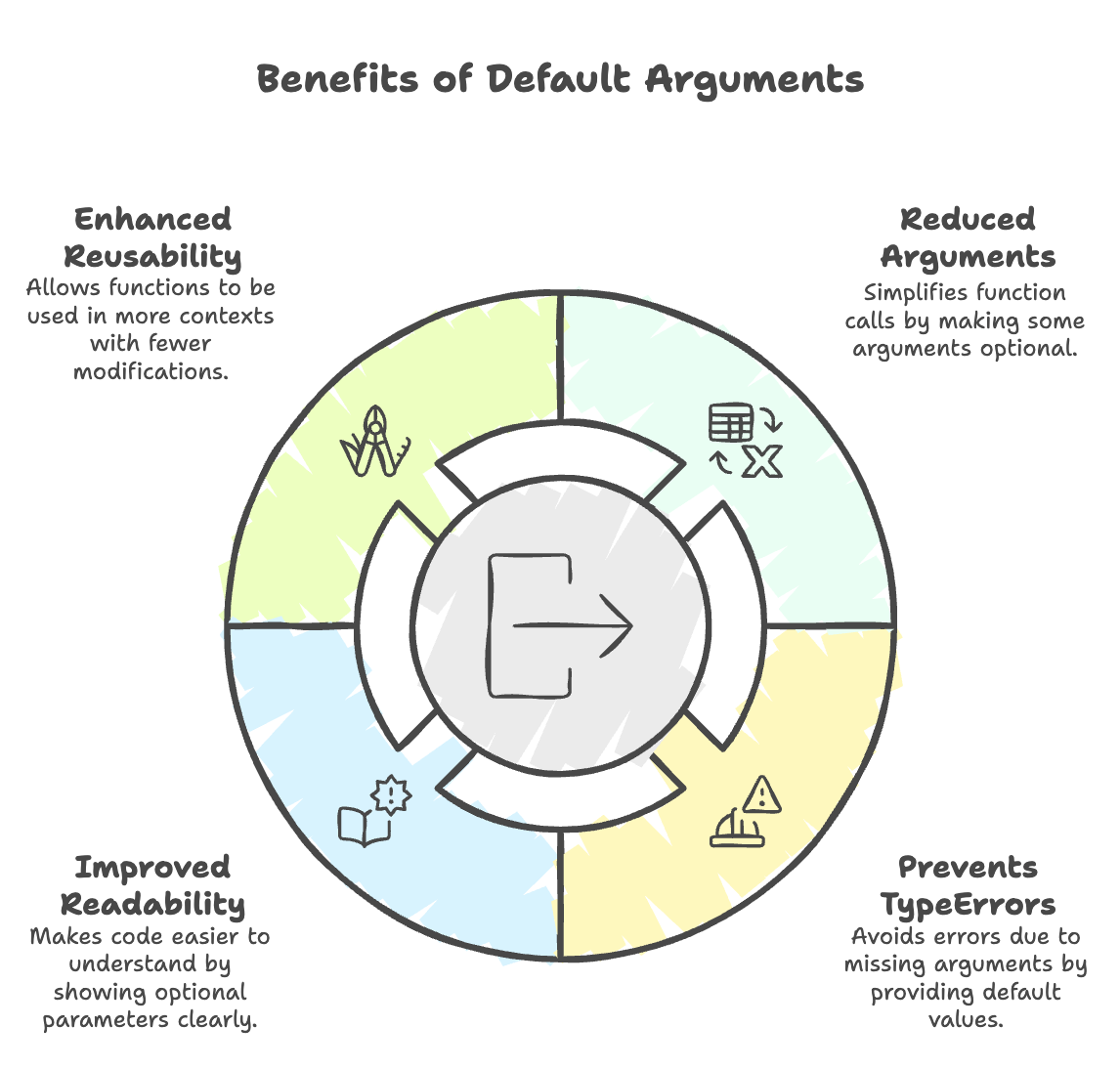
- Default arguments allow you to define pre-assigned values for function parameters. When a function is called without providing those arguments, Python automatically uses the default values instead.
- This makes functions more flexible and user-friendly, as they can handle both minimal and complete inputs without causing errors.
How it works:
- Default values are assigned in the function definition.
- If a value is passed during the function call, it overrides the default.
- If no value is passed, the default value is used.
Example
def add(num1=0, num2=0):
    return num1 + num2
Function Calls and Outputs
add()        # 0
add(4)       # 4
add(4, 5)    # 9
If more arguments than defined are passed:
add(4, 5, 6)Error
TypeError: add() takes from 0 to 2 positional arguments but 3 were givenDefault arguments improve flexibility while still maintaining control over function input.
Variable-Length Arguments (*args)
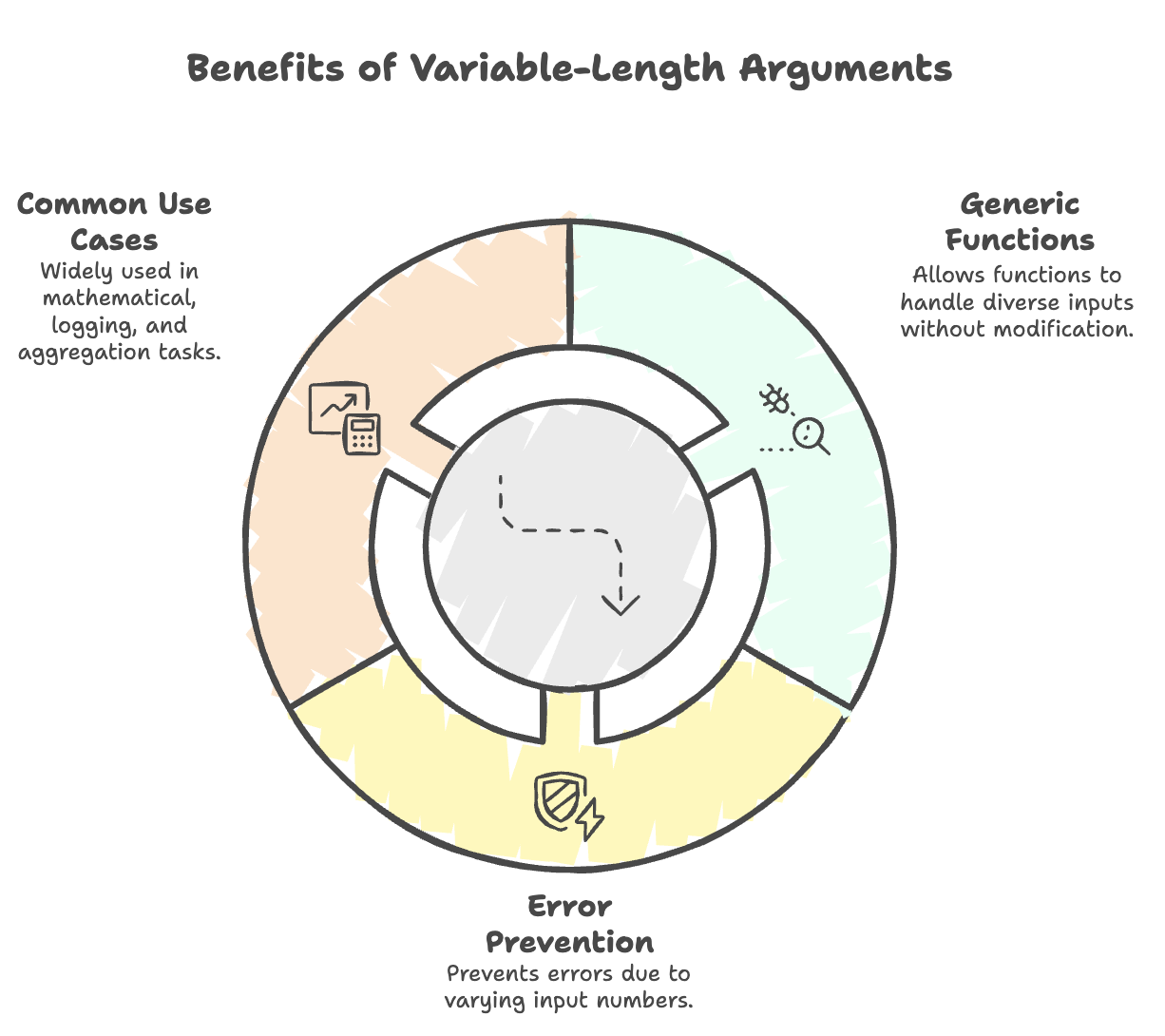
When the number of arguments is unknown, Python allows variable-length positional arguments using a single asterisk (*).
How it works:
- The
*argsparameter allows a function to accept any number of positional arguments. - All extra positional arguments passed to the function are automatically collected into a tuple.
- This makes the function flexible, eliminating the need to define multiple versions of the same function for different argument counts.
- You can iterate over
argsjust like any other tuple to process each value.
Example: Accepting Multiple Values
def add(num1, *num2):
    total = num1
    for n in num2:
        total += n
    return total

result = add(4, 5, 6, 7)
print(result)
Output
22
*eliminates the need to create multiple functions for different argument counts.
Keyword Arguments
Keyword arguments allow values to be passed using parameter names, making function calls clearer and avoiding issues caused by incorrect order.
Example
def person(name, age):
    print("name:", name)
    print("age:", age)

person(age=30, name="Navin")
Output
name: Navin
age: 30
If extra keyword arguments are passed to a function that doesn’t accept them:
person(name="Navin", age=30, loc="Pune")Error
TypeError: person() got an unexpected keyword argument 'loc'Keyword Variable-Length Arguments
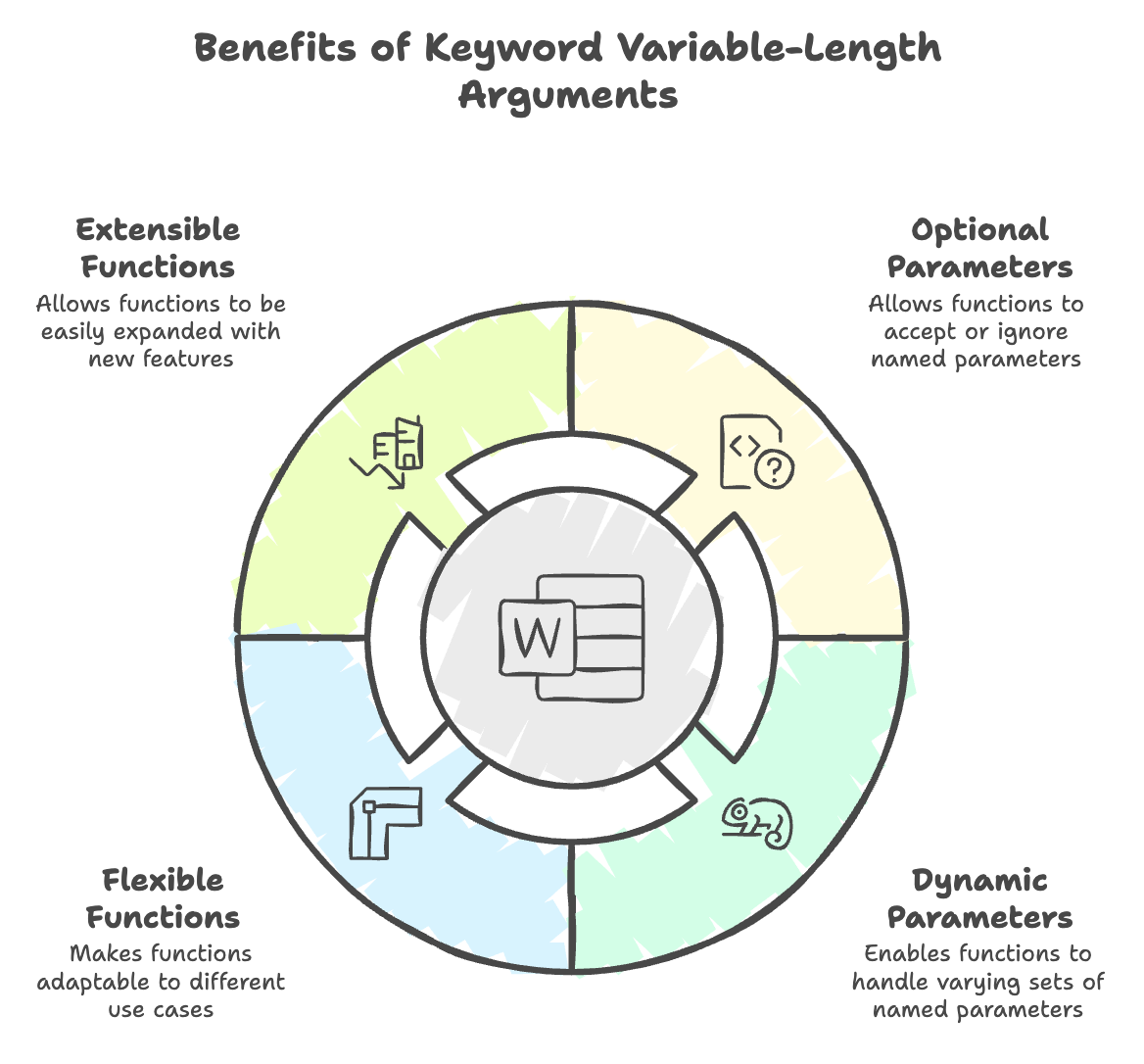
**allows a function to accept any number of keyword arguments without knowing their names in advance.- All supplied keyword arguments are collected into a dictionary, where each key is the argument name and each value is the corresponding data.
- Inside the function, you can iterate over the dictionary to process each key-value pair safely, without raising errors for extra arguments.
Example
def person(name, **kwargs):
    print("name:", name)
    for k, v in kwargs.items():
        print(k, ":", v)

person(name="Navin", age=30, loc="Pune", tech="Python")
Output
name: Navin
age : 30
loc : Pune
tech : Python
**is useful when dealing with optional or dynamic configuration data.
Summary
- Python functions support required, default, variable-length, and keyword arguments.
- Default arguments make parameters optional and flexible.
*argshandles multiple positional inputs as a tuple.- Keyword arguments improve readability and reduce order-related bugs.
**kwargsenables fully dynamic, dictionary-based keyword input.
Written By: Muskan Garg
How is this guide?
Last updated on