
Pattern Matching InstanceOf
Pattern matching for instanceof, introduced as a preview feature in Java 14-15 and standardized in Java 16, modernizes how developers perform type checks and casts in Java. This feature eliminates the repetitive pattern of checking a type with instanceof, casting it, and then using it, reducing boilerplate code and making Java programs more concise, readable, and less error-prone.
Before pattern matching, the instanceof operator was used to test whether an object is an instance of a particular class, subclass, or interface. It returns a boolean value (true or false).
What is instanceof?
The instanceof operator checks whether an object is:
- An instance of a specific class
- An instance of a subclass (inheritance)
- An implementation of an interface
Syntax
objectReference instanceof ClassNameReturns
true→ If object is an instance of the specified typefalse→ If object is not an instance or isnull
Basic Examples
1. Class Check
MyObject obj = new MyObject();
System.out.println(obj instanceof MyObject); // true
2. Inheritance Check
class Bird {}
class Eagle extends Bird {}

Eagle eagle = new Eagle();

System.out.println(eagle instanceof Bird);  // true
System.out.println(eagle instanceof Eagle); // true

Bird bird = new Bird();
System.out.println(bird instanceof Eagle); // false- A subclass object is an instance of its superclass
- A superclass object is not an instance of its subclass
3. Null Safety
Eagle eagle = null;

System.out.println(eagle instanceof Bird);  // false
instanceof automatically handles null, no need for explicit != null.
4. Interface Check
interface Bird {}
class Eagle implements Bird {}

Eagle eagle = new Eagle();
System.out.println(eagle instanceof Bird); // true
The Problem with Traditional Approach
Before pattern matching, using instanceof required three steps:
- Type check
- Explicit cast
- Use the object
if (obj instanceof Dog) {
    Dog dog = (Dog) obj;
    dog.bark();
}
Problems
- Type name repeated multiple times
- Explicit casting required
- Verbose and cluttered
- Error-prone (wrong cast, typos)
- Boilerplate-heavy
Pattern Matching for instanceof
Pattern matching combines type check + variable declaration + cast into one step.
New Syntax
if (objectReference instanceof ClassName variableName) {
    // variableName is already casted
}
Comparison: Before and After
Before
if (obj instanceof Dog) {
    Dog dog = (Dog) obj;
    dog.bark();
}
After (Modern Java)
if (obj instanceof Dog dog) {
    dog.bark(); // No cast needed
}
Benefits
- Type mentioned only once
- No explicit cast
- Cleaner and shorter
- Safer and more readable
Practical Example
public static void printAnimalSound(Object obj) {
    if (obj instanceof Dog dog) {
        dog.bark();
    } else if (obj instanceof Cat cat) {
        cat.meow();
    }
}- No casting
- No repetition
- Clear intent
How Pattern Matching Works?
Variable Scope
Pattern variables are only available where the compiler guarantees the type match succeeded.
if (obj instanceof String str) {
    System.out.println(str.length()); // OK
}
// str not accessible here
Flow Scoping
The compiler intelligently extends scope when safe.
if (!(obj instanceof String str)) {
    return;
}

System.out.println(str.length()); // OK
Since the method exits if not a String, the compiler guarantees str exists afterward.
Logical Operators with Pattern Matching
Using AND (&&) – Supported
if (obj instanceof String str && str.length() > 5) {
    System.out.println("Long string: " + str);
}- Pattern variable available on right side
- Safe and clean
Using OR (||) – Not Allowed
if (obj instanceof String str || obj instanceof Integer num) {
    // Cannot use str or num here
}- Compiler error Because only one condition may be true, type is not guaranteed.
Negation Pattern
if (!(obj instanceof String str)) {
    return;
}

System.out.println(str.length());- Very clean and recommended pattern
Before vs After Comparison
Before Pattern Matching
if (shape instanceof Circle) {
    Circle circle = (Circle) shape;
    System.out.println(circle.radius);
}
After Pattern Matching
if (shape instanceof Circle circle) {
    System.out.println(circle.radius);
}
Improvements
- Explicit casts removed
- Reduced repetition
- Cleaner structure
- Less error-prone
Best Practices
Use Meaningful Variable Names
if (shape instanceof Circle circle) { }Avoid:
if (shape instanceof Circle c) { }Use Early Returns
Cleaner and flatter code:
if (!(obj instanceof User user)) {
    return;
}
Limitations
Cannot Be Used with Primitive Types
int x = 10;
// x instanceof Integer ❌ Not allowed
Only works with reference types.
Pattern Variables Are Effectively Final
if (obj instanceof String str) {
    // str = "New"; ❌ Not allowed
}
They cannot be reassigned.
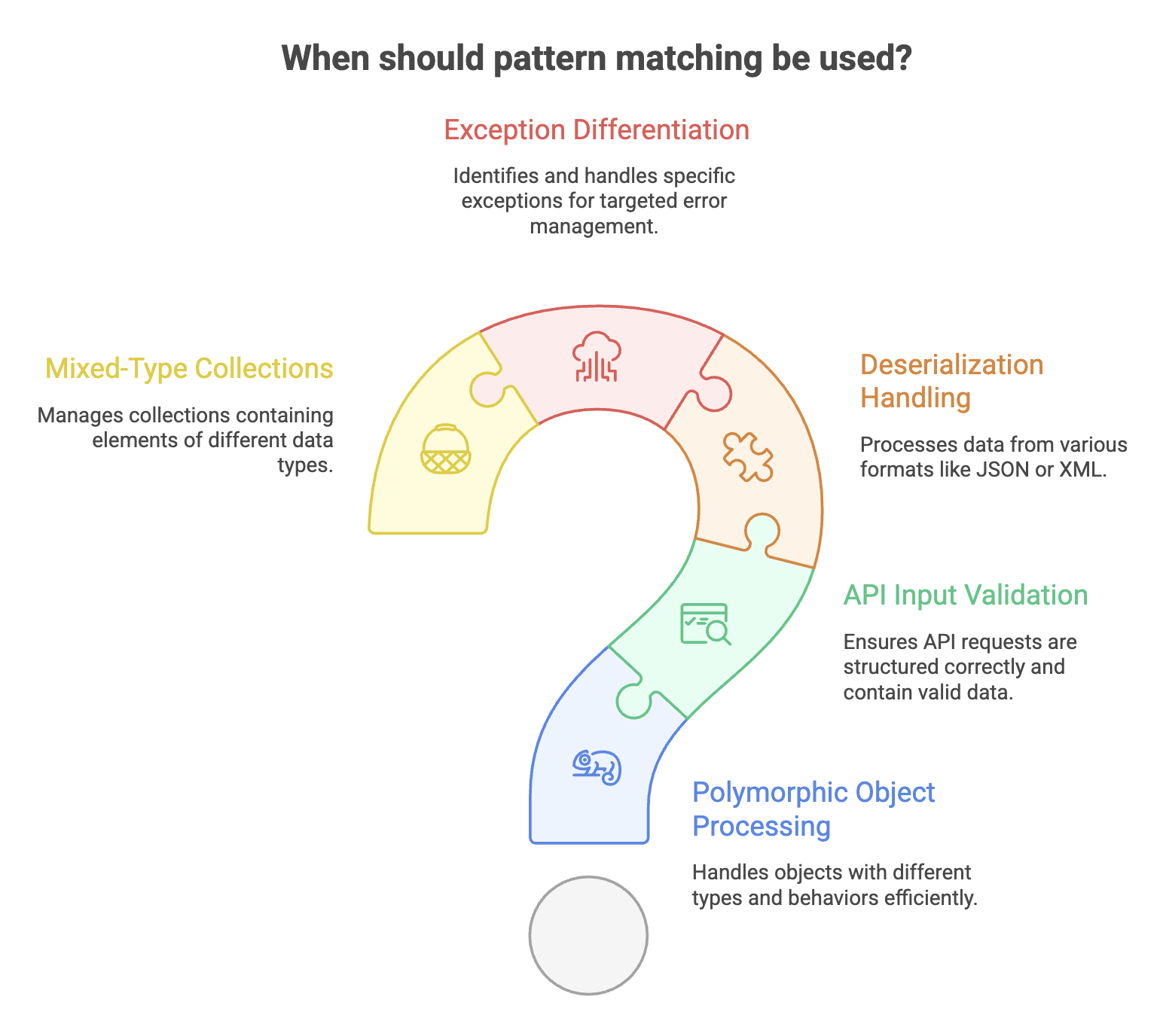
Summary
- Pattern matching for
instanceofsimplifies type checking by combining the type test and casting into a single step. - It removes unnecessary boilerplate code and eliminates explicit casting.
- The feature improves readability and reduces the chances of casting errors.
- Pattern variables are only available where the type check is guaranteed to be true, ensuring safety.
- It is an important modern Java feature that integrates well with records, sealed classes, and switch expressions.
Written By: Muskan Garg
How is this guide?
Last updated on